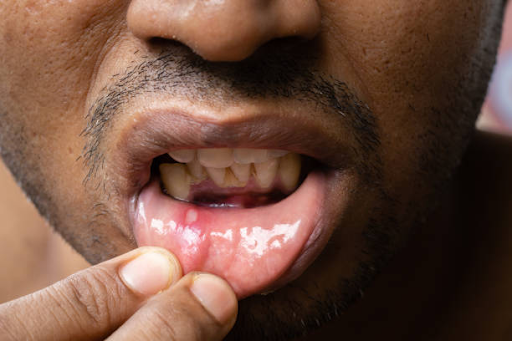
What Are the Differences Between Canker Sores and Cold Sores?
What Are the Differences Between Canker Sores and Cold Sores? Did you know that nearly…

Cold sores are extremely contagious. Roughly 70% of the total population is infected with the virus that causes cold sores, the herpes simplex virus 1 (HSV-1). The World Health Organization estimates that 3.8 billion people under age 50 have HSV-1. And these fluid-filled, crusty blisters that develop on or around the lips are about as unwelcome as they are common.

Cold sores, also known as fever blisters, HSV1, or oral herpes, tend to last approximately 14 days. Their prominent appearance on the face can make their temporary presence (an “outbreak”) feel like an eternity. Fortunately, when you know the symptoms of a cold sore, you can start to treat it early and effectively shorten the duration of the outbreak.
In this guide, we’ll cover everything you need to know about cold sores: how contagious they are, how they spread, and how to recognize the symptoms, so you’ll be better prepared to prevent and treat them.
If you’ve ever had a cold sore, you are familiar with the dreaded “tingle.” A tingling sensation on the lip is often the very first sign that the cold sore virus (HSV-1) is active.
Before learning about the stages of cold sore symptoms, it’s important to know that HSV-1 has two primary states in the human body:
So, when you first feel symptoms of a cold sore, you are receiving signals that the HSV-1 virus has awakened and is about to break out into a cold sore. Symptoms advance very quickly and last up to 14 days.
| Symptoms in the affected area (often on or above the lip) | |
|---|---|
| Day 1 | Tingling or numbness signals the virus is on its way. |
| Days 1 to 3 | Small bumps and fluid-filled blisters emerge and cluster. The area may itch, throb, and sting. |
| Days 3 to 4 | Blisters break and weep. This can be painful. |
| Days 4 to 5 | Crust forms as blisters dry up. This can be itchy. |
| Days 5 to 12 | The crust gradually flakes off as the skin below heals. |
| By day 14 | Shiny scar (temporary) left behind until skin fully heals. |
Other, more general, physical symptoms can occur when the HSV-1 virus enters the body, especially during the initial infection and the very first outbreak.
| Bodily symptoms that can accompany a cold sore |
|---|
| Fever |
| Headache |
| Sore throat |
| Fatigue |
| Swollen glands (lymph nodes) |
| Nausea |
| Painful sores inside the mouth |
These symptoms of an initial outbreak can present similarly to a cold or general feeling of “being under the weather.”
Once the virus (HSV-1) enters your body, it is there forever. Even if it never emerges again as a cold sore, it remains present in the nerves of your body. During the dormant stages of HSV-1, you are unlikely to spread the virus to someone else.
However, from that first tingle until your skin is fully clear, your cold sore is contagious to other people – and even other areas of your own body.

Pro Tip:
Think of that initial “tingle” as your body’s early warning system. Even before visible symptoms appear, this is your notice that the virus (HSV-1) has awakened, and it’s time to act. This is an ideal time to start using Blistex Cold Sore Treatment Docosanol Cream 10% – when used at the earliest tingle the treatment provides the best results, shortening the healing time of cold sores.
Yes, especially during an active outbreak of oral herpes (the presence of a cold sore), cold sores are highly contagious.
As with most viruses, cold sores (HSV-1) are most contagious when they have their heaviest viral load, which is during the first 24 to 48 hours of sore formation. While the viral load may weaken over time, cold sores are contagious throughout the entire outbreak, until the sore is gone and the affected skin is completely healed and clear.
Cold sores spread through skin-to-skin contact with an infected person or even through sharing things that touch an infected person’s mouth or come into contact with their saliva.

Pro Tip:
Cold sores can be spread by the hands of an infected person to their eyes (HSV keratitis), fingers (herpetic whitlow), or genitals (genital herpes). Maintaining good personal hygiene during an outbreak prevents this.
When cold sores are contagious, there are several ways to contract them, either for the first time or as a recurrence. The cold sore virus, HSV-1, appears in two different ways:
Because cold sores are so contagious, it’s not very difficult to pick up your first case of HSV-1. Cold sores are easily spread by directly touching someone’s sore or through close personal contact, such as:

Any activity involving close personal contact with someone who has an active cold sore outbreak can likely spread the highly contagious HSV-1 virus.
The word “herpes” comes from the Greek word “herpein,” meaning “to creep or crawl.” And that describes exactly how the virus (HSV-1) travels within the body. After a cold sore heals, the virus creeps back through your nerves to hide until it is triggered again. While it’s not always possible to know when the virus might activate and a cold sore will appear, there are common stressors that tend to wake it up:
When the body’s guard is down for one reason or another, the HSV-1 virus flares—it creeps back along the nerve pathways and reappears as a cold sore.
Genetics plays a part, too. While 70% of the population may have the virus, some people have symptoms, and others don’t. Immunologic genes can influence the body’s ability to fight the outbreak.
It is nearly impossible to kiss someone with a cold sore and not contract the HSV-1 virus. While certain factors, such as the type of kiss and your genetics, age, and immune system, might impact your chances of developing a sore, it is always better to avoid close personal contact when someone has a cold sore, and that includes kissing.
If you do kiss someone who has an active cold sore, the incubation period (how soon after contact you may see symptoms) typically ranges from 2 to 14 days after kissing.
Monitor yourself for symptoms and begin to treat your cold sore as soon as you feel the first tingle.
Cold sores are contagious and can impact other parts of your body (including the genital area). Intimate personal contact is risky during an active HSV-1 infection: It is possible for a cold sore to cause genital herpes sores.

When you have an active cold sore, you are contagious from that first tingle until the sore has completely cleared. Typically, the cold sore is most contagious right at the start and while the blisters are weeping or oozing, but until the skin is completely healed and clear, the virus (HSV-1) can be spread to someone else.
Pro Tip:
How long a cold sore/ fever blister is contagious can also depend on how quickly it is treated. Act at the first sign and be consistent with treatment to help shorten the outbreak.
If you’re looking for an over-the-counter option, consider Blistex Cold Sore Treatment Docosanol Cream 10%. This treatment can prevent cold sores from appearing when used at the first tingle. Additionally, it can help support the healing process.

Immediate, targeted treatment to help shorten healing time and relieve pain & itching of cold sores
Knowing the signs and symptoms of cold sores is a large part of the battle in helping yourself through an outbreak. The faster you start treatment, the sooner your cold sore can start to heal.
If you have the HSV-1 virus or have recently had contact with someone who has an active cold sore, it is a good idea to have treatment options on hand so you can begin managing the outbreak at the very first tingle.
Using an effective over-the-counter cream, like Blistex Cold Sore Treatment Docosanol Cream 10%, can reduce the duration of a cold sore outbreak and shorten the time it takes to heal.
Docosanol 10% is the FDA-approved active ingredient in the Blistex Cold Sore Treatment item. It works fast by penetrating the skin and targeting the HSV-1 virus and blocking it from entering surrounding cells. This immediate action makes Blistex effective in keeping the cold sore from spreading, while also reducing pain, burning, itching, and irritation.
To ease the pain and discomfort associated with the cracked, painful skin of a cold sore and the surrounding area, Blistex Cold Sore Fast-Acting Pain Relief has maximum-strength lidocaine, a pain reliever that works by blocking nerve signals to the area where it is applied. It is formulated with glycerin to create a hydrating, long-lasting barrier to keep lips and the surrounding area from dryness and cracking.
Blistex Cold Sore Treatment Docosanol Cream 10% and Blistex Cold Sore Fast-Acting Pain Relief are available separately, or in the convenient Blistex Cold Sore Kit, which contains both products. Having a solution like this on hand makes you ready to start treatment at the first sign of a cold sore, helping to shorten the duration, ease the symptoms, promote healing, and protect your lips from day one.

Dermatologist recommendation:
“The sooner you put it on, the better chance you’re going to have at reducing the symptoms – I recommend Blistex” — Dr. Hal Weitzbuch
Now that you know the ins and outs of cold sores, this quick reference guide can help you manage an existing outbreak or prevent a new one.
| To prevent a cold sore or speed recovery, DO: |
|---|
| Act quickly at the first sign of a cold sore |
| Keep a trusted remedy on hand to use at the first tingle or blister, like Blistex Cold Sore Treatment Docosanol Cream 10%. |
| Know the triggers of a cold sore (sun, injury, stress, etc.), so you can manage them |
| Wear a lip balm with SPF 15 or above to protect your lips all year round |
| Wash your hands before and after applying cream (or wear disposable gloves) |
| Rub in cream gently but completely |
| Apply treatment several times daily until the sore is healed |
| Stay hydrated and eat mild foods if spicy or acidic foods irritate the sore |
| If you have an active cold sore, DON’T: |
|---|
| Kiss or have personal contact if you or your partner has an active cold sore |
| Touch your cold sore and then touch your eye or other body parts |
| Pick the crusty scab—it will only prolong the healing process |
| Share personal items if you or someone else has an active cold sore |
If you are pregnant or have health issues, consult with your doctor before any treatment. In most cases, cold sores are mild and clear up effectively with proper treatment and care. You should see improvement within days and a full clearing of the sore and scab within 14 days.
When treating your cold sore, if symptoms get worse or HSV-1 continues to spread, visit your healthcare provider so they can examine the blisters and determine the proper course of treatment.
Pro Tip:
People with weakened immune systems due to underlying health conditions should consult their doctor about cold sores, especially if they are frequent or severe.
The answer to the question: “Are cold sores contagious?” is a resounding yes. HSV-1, the virus that causes cold sores (also known as fever blisters), is not only highly contagious but also very effective in dodging the body’s immune system. Once it’s in your body, it creeps along the nerve pathways and hides out until something triggers it to reappear—as the blisters of a cold sore on or near your lip. When cold sores are actively contagious, it is best to avoid personal contact and sharing personal items. Start treatment at the first hint of a symptom, with a product that helps stop the spread of HSV-1 and protects your lips while they heal. Blistex Cold Sore Treatment shortens the healing time of blisters & symptoms of cold sores; Blistex Cold Sore Fast-Acting Pain Relief immediately relieves symptoms and creates a protective barrier. Blistex also offers a Cold Sore Kit containing both the Treatment & Pain Relief.
With the right treatment, your cold sore should clear up within 14 days. Keep your trusted products on hand for the next time the virus is triggered, and you’ll always be ready to fight fast and boost healing time.
Sources:

Jennifer Towns developed her early interest in aesthetic health and beauty sciences, later specializing in lip care and treatment. She has worked in both clinical and cosmetic settings, focusing on restorative and preventive techniques to help patients maintain healthy, natural-looking lips.

Dr. Walter Hunt is a board-certified specialist in dermatology and cosmetic medicine, with a strong focus on lip health and rejuvenation. Over the years, he has combined medical research with hands-on practice, providing innovative treatments designed to enhance lip care, hydration, and overall aesthetic wellness.
What Are the Differences Between Canker Sores and Cold Sores? Did you know that nearly…

Are Cold Sores Contagious? Tips to Stop the Spread and Heal Faster. Cold sores are…

What Causes Cold Sores? Cold sores are caused by a virus that primarily enters the…
Blistex Cold Sore Treatment Docosanol Cream 10% works best when applied at first tingle. Buy at a retailer near you.
 Shop Now
* Among some Dermatologists who recommended at least one brand for lip moisturization and treatment of chapped lips in a ProVoice® 2023 survey